Choosing the right career path is one of the most important life decisions, especially in a developing economy where opportunities are growing but competition is also increasing every year, and that is why having a clear and realistic roadmap is essential for anyone who wants to achieve long-term professional success instead of moving blindly from one job to another without a defined direction. This Job Guide in Pakistan is designed to help students, fresh graduates, and working professionals understand how to plan their future with confidence by analyzing market demand, building useful skills, and following a structured approach toward Career Growth that leads to stability, respect, and financial independence.
Understanding the Job Market in Pakistan
The Job Market in Pakistan is diverse and constantly evolving due to population growth, technological development, and changes in global employment trends, which means that traditional career paths like government service, engineering, and medicine are no longer the only secure options, while new sectors such as information technology, digital marketing, e-commerce, and remote freelancing are creating fresh opportunities for people who are willing to learn modern skills. It is important to understand that market demand changes every few years, and careers that were considered stable in the past may no longer guarantee success today, which is why continuous learning and adaptability should be treated as essential parts of your professional life rather than optional extras.
When planning your career roadmap, you should always study which industries are expanding and which are shrinking, because this knowledge will help you invest your time and education in fields that actually offer future growth rather than short-term excitement, and this habit alone can save you from years of frustration and unemployment.
Step One: Self-Assessment and Career Clarity
Before choosing any profession, the first step in your Career Roadmap should be a deep self-assessment process where you honestly evaluate your interests, strengths, weaknesses, and long-term goals, because a career chosen only for money without considering personal aptitude often leads to stress and dissatisfaction later in life. Some people are naturally good at numbers and logic, which makes them suitable for accounting, finance, or engineering, while others are more creative and communicative, which can guide them toward media, marketing, or teaching professions.
Understanding your personality type and learning style can also play a major role in your success, because a person who enjoys independent work may perform better in freelancing or technical fields, while someone who enjoys teamwork may excel in corporate or management roles. This stage is about clarity, and clarity is what turns confusion into direction.
Step Two: Choosing the Right Education Path
Education is the foundation of any strong Career Growth plan, and in Pakistan, students often choose degrees based on family pressure or social trends rather than personal goals, which can result in poor performance and limited job prospects. Instead of following the crowd, you should choose an academic path that aligns with both your interests and market demand, because this combination increases your chances of success significantly.
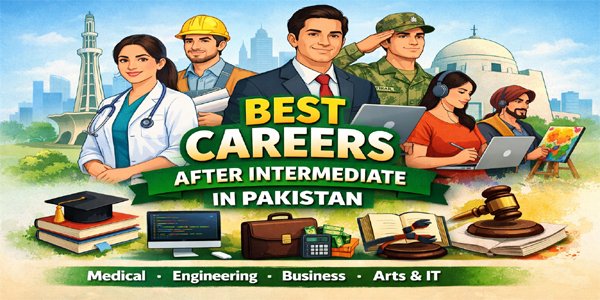
Traditional degrees such as medicine, engineering, and law still hold strong value, but they require long-term commitment and competitive preparation, while newer fields such as computer science, artificial intelligence, business analytics, and media studies are becoming increasingly important in the modern economy. Technical and vocational education should also be respected, because skilled technicians in electrical work, plumbing, automobile repair, and industrial machinery are in constant demand and often earn stable incomes without spending many years in university.
Step Three: Skill Development for Real-World Success
Academic education alone is no longer enough to secure a good job, which is why Skills Development has become the backbone of modern career planning in Pakistan, especially for young people who want to compete both locally and internationally. Employers today look for practical abilities such as communication skills, computer literacy, problem-solving capacity, and adaptability, because these traits determine how well a person can perform in real workplace environments rather than just in examination halls.
Digital skills such as programming, graphic design, content writing, and data analysis are especially powerful because they open doors to remote work and global freelancing platforms, which means that geographical limitations become less important when your skills are valuable. Soft skills like time management, teamwork, and professional behavior are equally important because they define how others perceive you and whether organizations trust you with responsibility.
High-Paying Career Options in Pakistan
When discussing High Paying Jobs in Pakistan, it is important to understand that salary levels depend not only on the profession but also on experience, performance, and continuous improvement. Information technology professionals, including software developers and cybersecurity experts, are among the highest earners due to the global demand for digital services. Medical professionals continue to enjoy respect and financial stability, especially those who specialize in surgery or private practice.
Business and finance professionals, particularly those working in multinational companies or running successful startups, also achieve strong income levels, while engineers in energy, construction, and telecommunications sectors remain valuable due to infrastructure development. The freelancing and remote work economy is also becoming a strong source of income for skilled individuals who can offer services such as web development, digital marketing, and online consulting to international clients.
Government Jobs versus Private Sector Jobs
In Pakistan, the debate between government jobs and private sector jobs has always been strong, because government employment is associated with stability, pensions, and social respect, while private sector employment is often linked with higher salaries, faster growth, and performance-based rewards. Choosing between these two paths should depend on your personality and life goals, because a person who values security and routine may prefer government service, while someone who enjoys competition and innovation may thrive in private companies or entrepreneurial ventures.
It is also important to note that government job preparation requires strong knowledge of general studies, current affairs, and subject-specific material, while private sector success requires professional skills, networking, and continuous self-improvement, which means that each path demands a different preparation strategy and mindset.
Role of Internships and Practical Experience
One of the most overlooked aspects of career planning is practical experience, because many students focus only on degrees and certificates while ignoring internships and part-time work opportunities that can teach them how the professional world actually operates. Internships provide exposure to workplace culture, communication standards, and real problem-solving situations, which helps young people understand whether a particular field suits them or not.
Employers also value candidates who have some form of experience, even if it is short-term or unpaid, because it shows initiative, discipline, and willingness to learn, which are qualities that cannot be measured through academic transcripts alone.
Importance of Networking and Professional Relationships
Career success in Pakistan is not only about what you know but also about who knows you, because networking plays a major role in discovering opportunities that are not publicly advertised. Building professional relationships through seminars, workshops, online platforms, and alumni networks can create pathways to mentorship, job referrals, and collaborations that accelerate your Career Growth.
Networking should not be seen as flattery or manipulation, but as a natural exchange of knowledge and support among professionals who share common interests and goals, and when done honestly and respectfully, it can become one of the strongest pillars of long-term career development.
Adapting to Change and Lifelong Learning
The modern economy is unpredictable, and professions that exist today may transform or disappear tomorrow, which is why adaptability and lifelong learning should be central principles of your Career Roadmap. Learning new tools, updating your knowledge, and staying informed about industry trends allows you to remain relevant even when technology or policies change.
Online courses, professional certifications, and self-study resources have made learning more accessible than ever, which means that lack of opportunity is no longer a valid excuse for stagnation, and those who take responsibility for their growth will always have an advantage over those who wait for change to come to them.
Challenges and How to Overcome Them
Unemployment, low starting salaries, and lack of guidance are common challenges faced by young professionals in Pakistan, but these obstacles can be overcome through patience, planning, and persistence. Instead of losing hope when faced with rejection, individuals should view setbacks as part of the learning process and use them to refine their skills and strategies.
Family pressure and social comparison can also create confusion, but staying focused on personal goals rather than others’ opinions helps maintain motivation and mental balance, which is essential for long-term success.
Final Thoughts on Career Growth in Pakistan
A successful career is not built in one year or through one decision, but through a series of thoughtful choices that align education, skills, experience, and mindset toward a clear purpose, and this is why having a structured Job Guide in Pakistan can act as a map rather than a rigid rulebook, helping individuals navigate uncertainty with confidence.
By understanding the Job Market in Pakistan, choosing the right education path, investing in Skills Development, and remaining adaptable to change, anyone can build a meaningful and financially stable future. True Career Growth is not only about earning money but also about gaining respect, independence, and the ability to contribute positively to society, which makes the journey just as important as the destination.

The author is a content writer who focuses on education, careers, and government job preparation in Pakistan. With a strong interest in competitive exams and current affairs, they aim to provide practical and easy-to-understand guidance for students and job seekers. Their goal is to help readers prepare smarter and stay motivated on their career journey.